

What is LexQ?
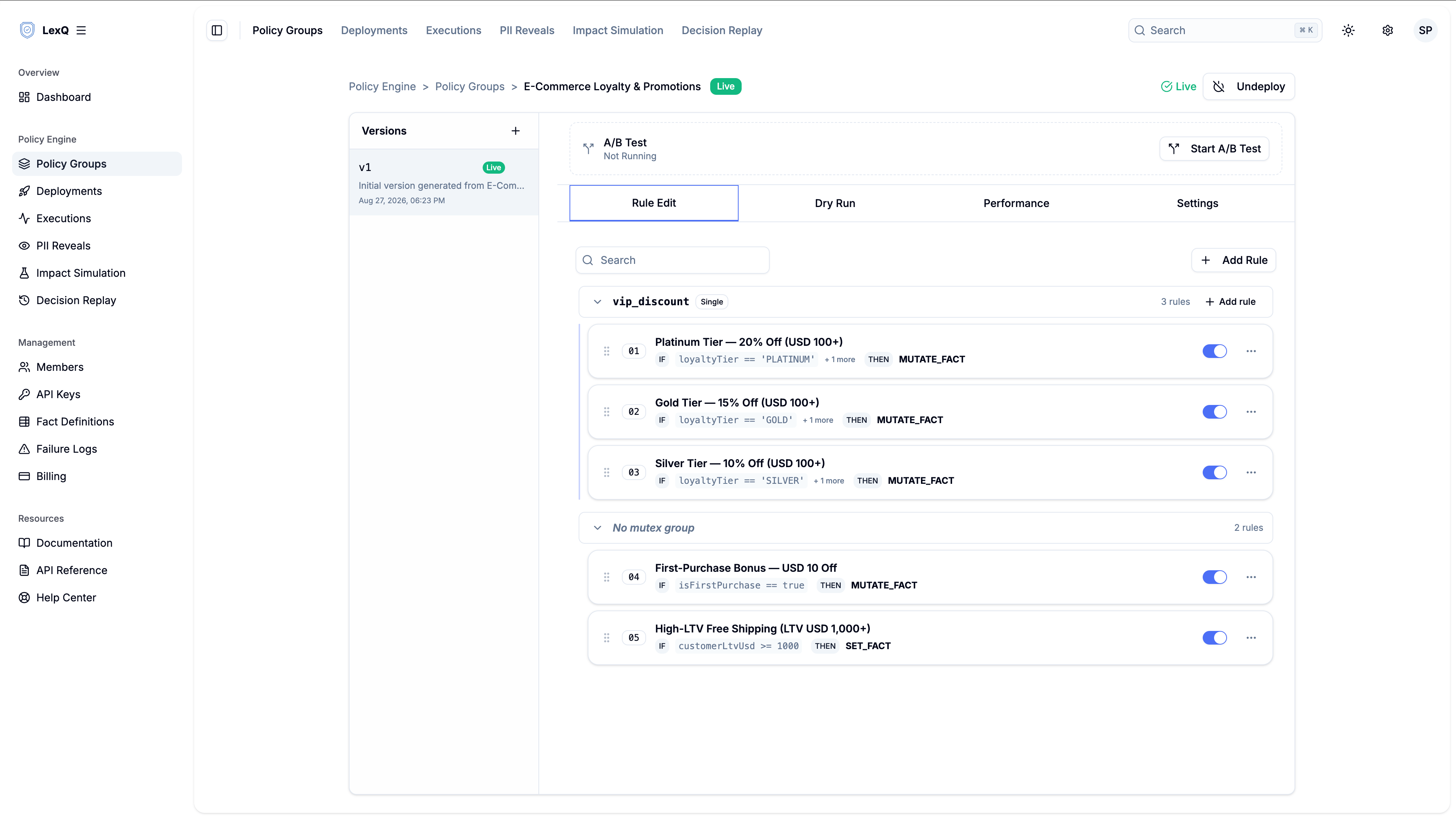
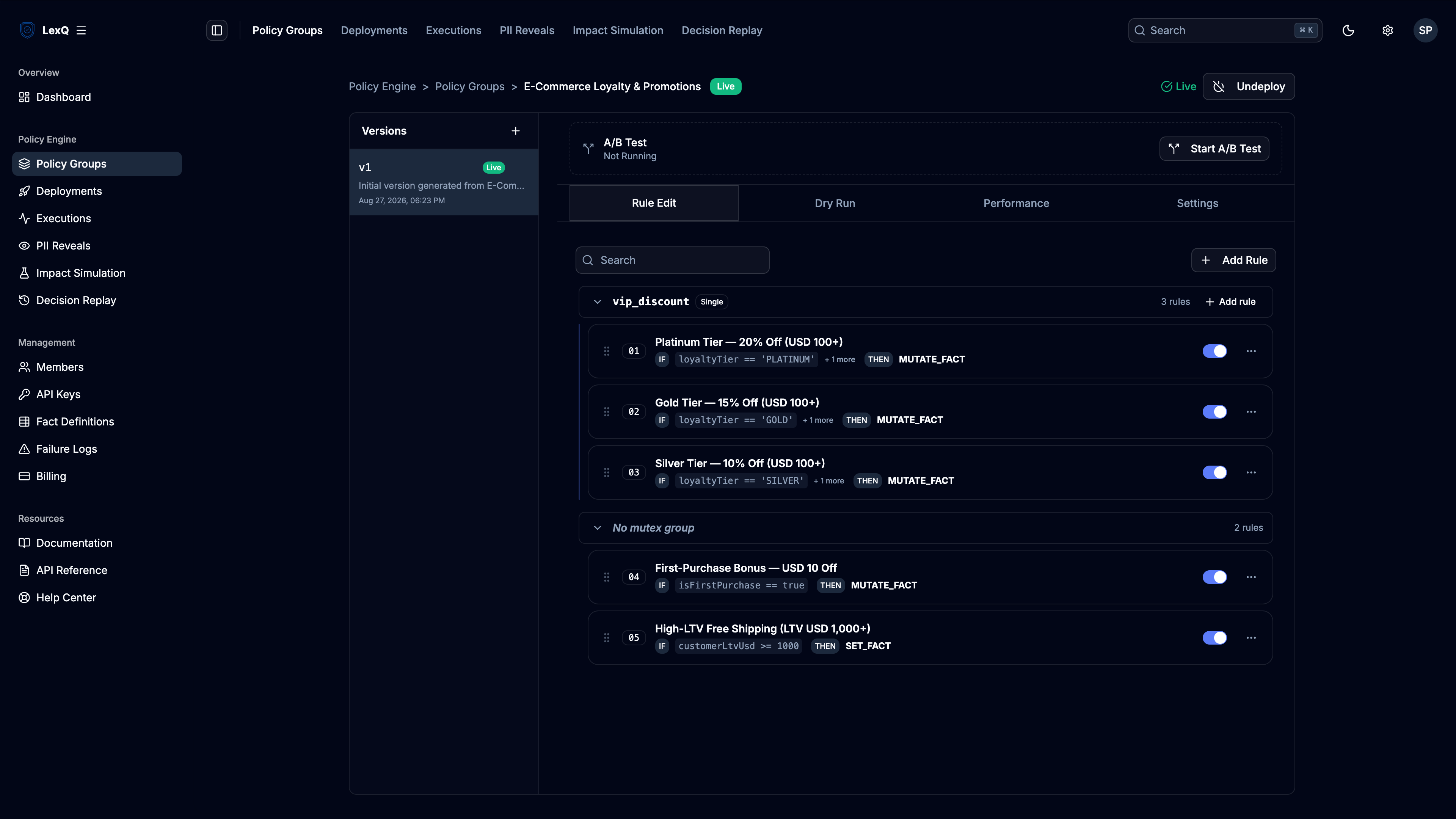
LexQ is the Decision Operations Platform for engineering teams. Instead of shipping application code every time a business rule changes, you define decisions in a visual console, prove every change with Impact Simulation before production, and deploy without touching application code.Visual Rule Builder
Create conditions and actions through an intuitive UI. Fully visual, fully traceable.
Git-style Versioning
Draft, publish, and deploy rule versions with full audit history.
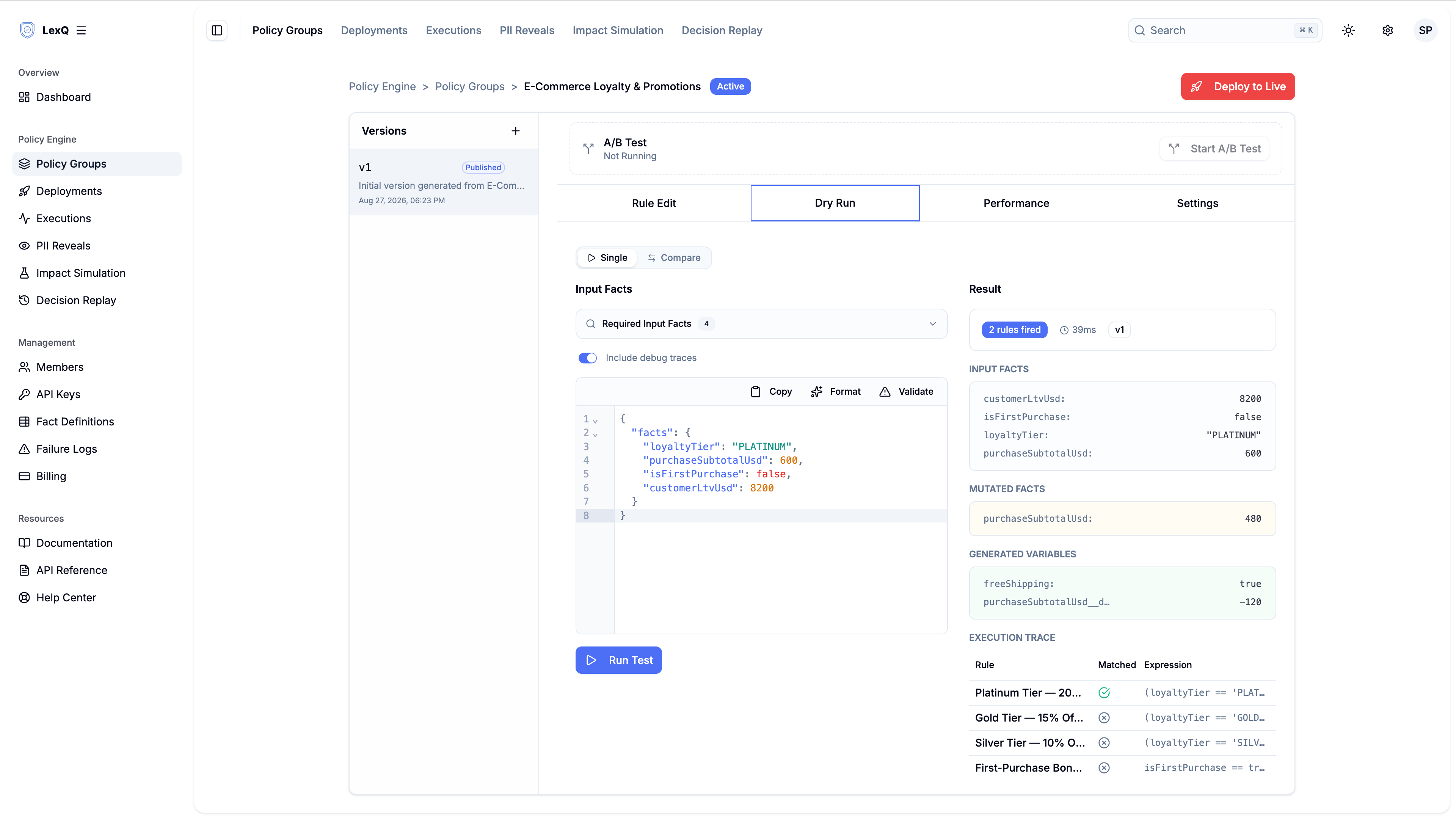
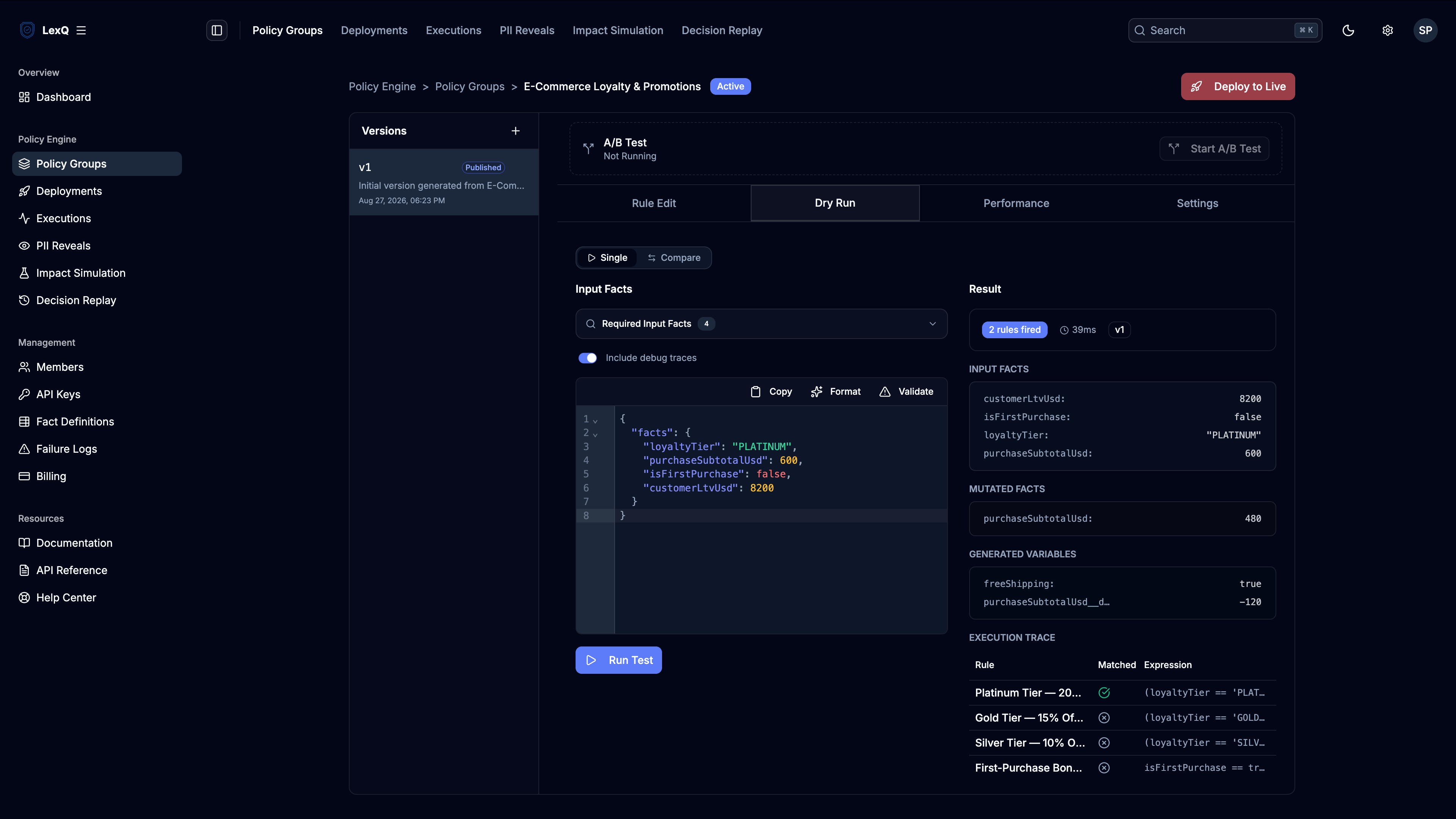
Impact Simulation
Test rule changes against real data before they touch production.
Decision Replay
Re-run past decisions against a candidate version and diff the outcome.
Decision Provenance
Every decision sealed with its why, its inputs, and who shipped the rules.
Full Execution Traces
Track every execution — what matched, what didn’t, and why.
See the Impact Before You Deploy
Architecture Overview
LexQ consists of three main components:Who is LexQ for?
LexQ is built for engineering teams that own the business decisions in their systems. Product managers and operations teams work alongside them — defining rules, reviewing simulations, and approving deployments — but engineering owns the integration and operates the platform. Teams use LexQ to:- Update business rules without deploying application code
- Prove every change against real data before it touches production
- A/B test rule versions with production traffic
- Maintain a full audit trail of every change and execution
Next Steps
Quickstart
Get your first rule running in under 5 minutes.
Glossary
Learn the official LexQ terminology.
API Reference
Integrate LexQ into your application.
Core Concepts
Understand how policy groups, versions, and rules work together.